
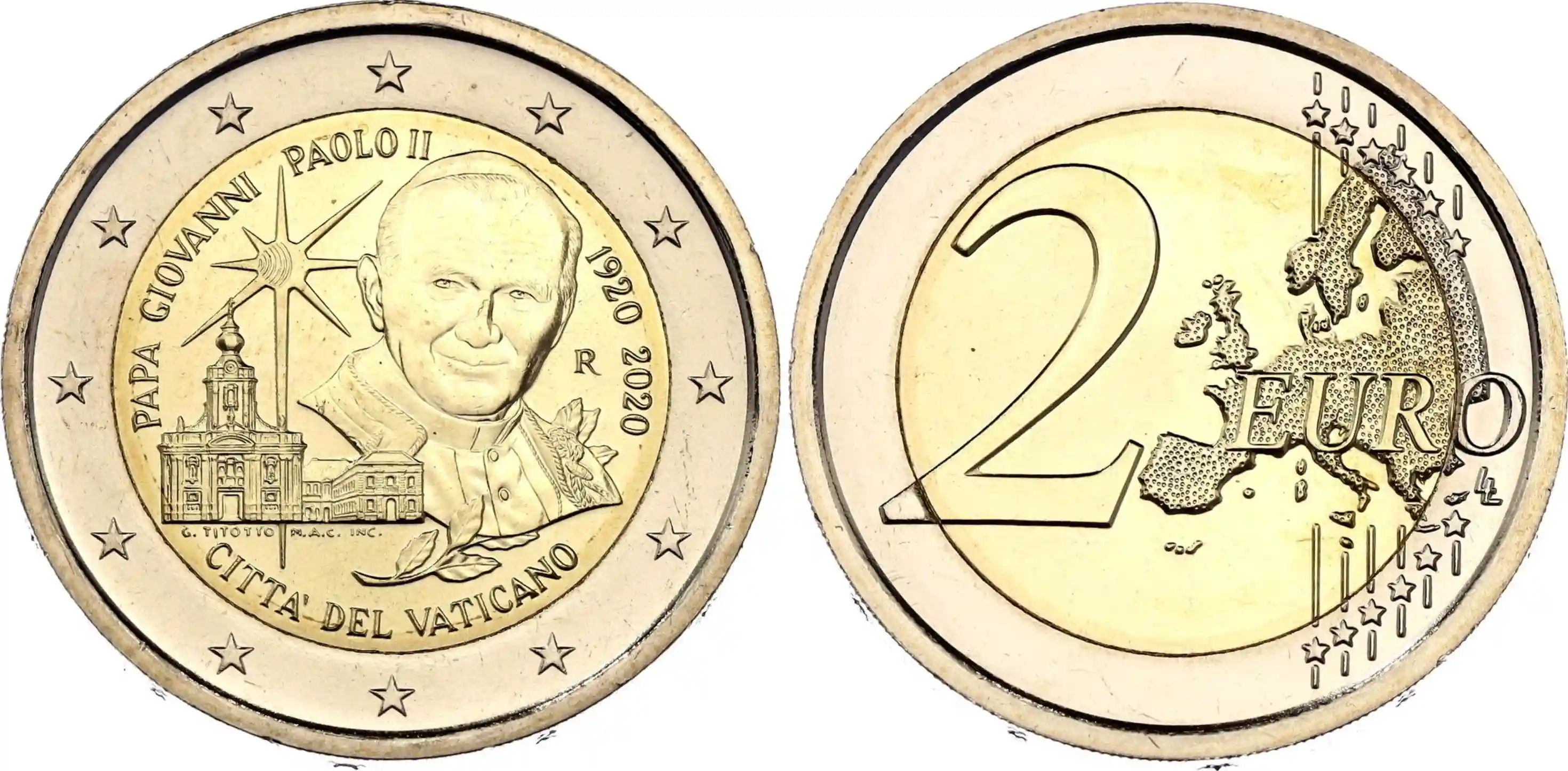
The Vatican items cost more than €200, but other rare 2 euro coins reach €1,000 and more. Always check the year and mint mark for your issues.
Monaco 2007
Year | 2007 |
Diameter | 25.75 mm |
Weight | 8.50 g |
Composition | Bimetallic |
Special Item Feature – 25th Anniversary of the Death of Grace Kelly
This piece stands as the undisputed king of all commemorative two-euro issues. The Palace of Monaco authorized this release to honor the memory of Princess Grace.
The design features a classic side profile portrait of the famous actress. The local mint released exactly 20,001 pieces in total. They packed every single coin inside a specialized red velvet presentation box.
Because Monaco skipped general circulation entirely, these pieces became instant collectors' targets. The extreme scarcity, combined with global nostalgia, created a perfect market storm.
Item Value €3,000–€4,500+
Greece 2002
Year | 2002 |
Diameter | 25.75 mm |
Weight | 8.50 g |
Composition | Bimetallic |
Special Item Feature – The S Mint Mark Error
This specific coin causes a massive public misconception across Europe every single day. Millions of citizens open online marketplaces and try to sell this coin for tens of thousands of euros.
When Greece adopted the euro currency in 2002, the local Athens facility lacked the physical capacity to strike enough coins. They outsourced part of the production to Finland.
The S for Suomi, which means Finland in the local language.
The mintage is over 70 million pieces. True pristine uncirculated bank rolls or specimens that carry genuine factory double strikes do attract intense niche interest.
Item Value €50–€3,000+
Monaco 2015
Year | 2015 |
Diameter | 25.75 mm |
Weight | 8.50 g |
Composition | Bimetallic |
Special Item Feature – 800 Years of the Fortress on the Rock
Monaco holds a second spot on this list due to its strict policy of ultra-low mintage, proof-only collector products. This coin honors the historic fortress that sits high above the principality. The mint authorized a tiny batch of just 10,000 copies.
Because the supply sits at half the volume of the famous Grace Kelly release, investors swarmed the market immediately. Wealthy collectors need this exact piece to complete their official microstate binders, which caused rapid price appreciation over a short period.
Item Value €2,300–€2,800
Vatican City 2005
Year | 2005 |
Diameter | 25.75 mm |
Weight | 8.50 g |
Composition | Bimetallic |
Special Item Feature – World Youth Day
The coin celebrates Pope Benedict XVI and his journey to Cologne, Germany. The reverse shows the famous Cologne Cathedral with a shooting star overhead. The Vatican restricted production to a tight 100,000 mintage cap.
Item Value €200–€350
San Marino 2004
Year | 2004 |
Diameter | 25.75 mm |
Weight | 8.50 g |
Composition | Bimetallic |
Special Item Feature – Bartolomeo Borghesi Commemorative
The republic dedicated its debut commemorative issue to Bartolomeo Borghesi, a world-famous nineteenth-century numismatist and archaeologist. The mintage is 110,000 pieces. Its historical legacy keeps prices stable and makes it a core requirement for European set builders.
Item Value €150–€300
Lithuania 2021
Year | 2021 |
Diameter | 25.75 mm |
Weight | 8.50 g |
Composition | Bimetallic |
Special Item Feature – Žuvintas Biosphere Reserve
This coin represents a true modern factory blunder that happened right inside the minting room. The Bank of Lithuania ordered a celebratory coin to highlight the protected animals of the Žuvintas reserve.
Technicians used the wrong edge-stamping die on a small batch of coins. Instead of the correct Lithuanian motto, the machines stamped the Latvian text onto the outer rim.
This cross-border mistake affected roughly 500 copies inside official Brilliant Uncirculated coin cards, which triggered an immediate buying frenzy across northern Europe.
Item Value €1,500–€2,000
Why Is the 2 Euro Coin Popular Among Numismatists?
The Commemorative Loophole
Geopolitical Diversity in a Uniform Format
The Coin Hunting
Extreme Microstate Rarities
By European Union regulation, the 2 Euro coin is the only denomination intended for circulation that member states are permitted to modify for commemorative releases.
In contrast, expensive proof sets that must be bought directly from a mint, standard, and many commemorative 2 Euro coins are released straight into circulation. Because of the open borders of the Eurozone, a coin minted in Finland can easily wind up in a cash register in Spain.
How to Spot a Rare 2 Euro Coin
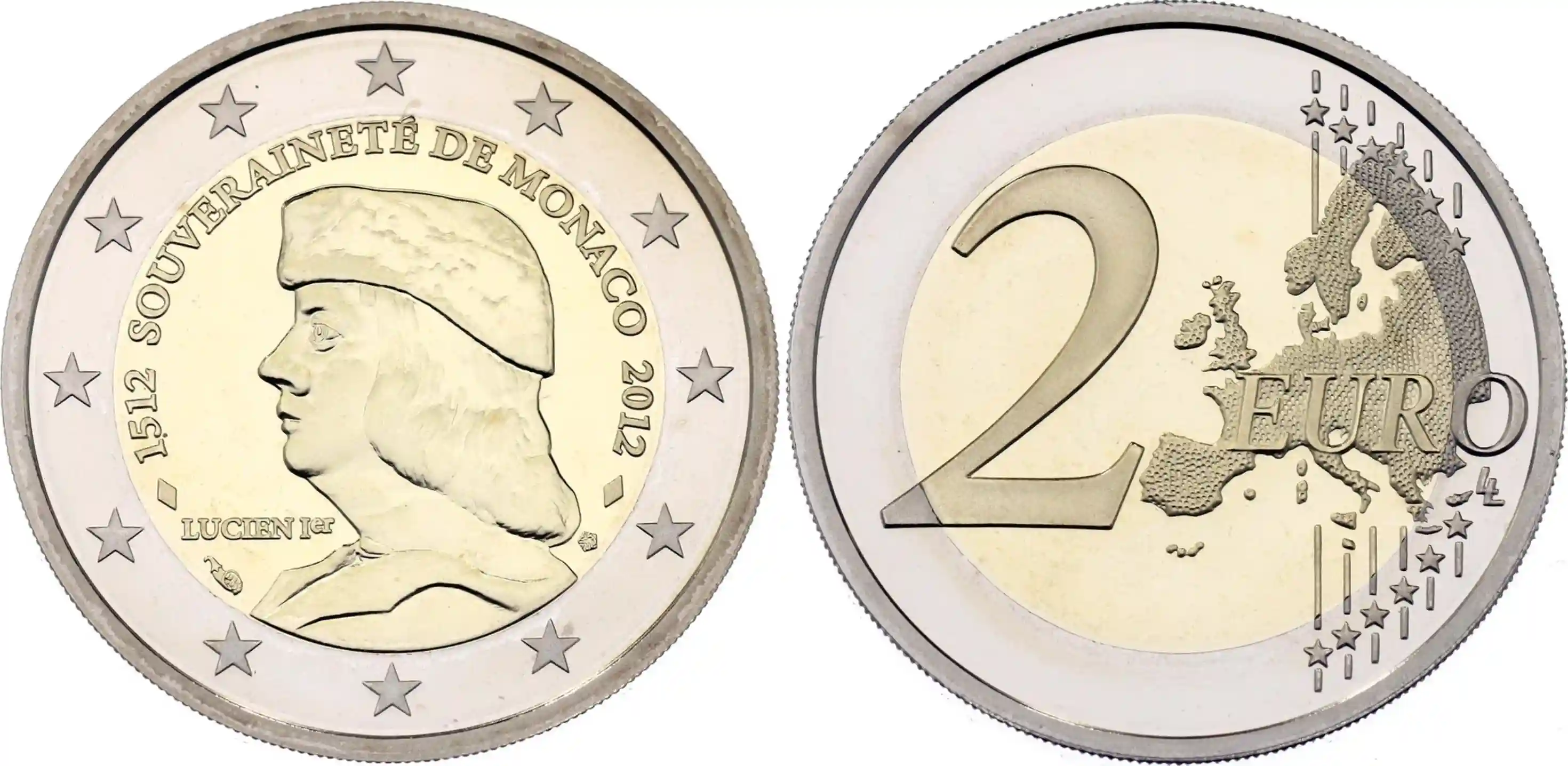
Step 1 – Check the Issuing Country & Year
Flip the coin over and look closely at the national side design. Focus your energy entirely on European microstates. Look for the names:
Monaco
San Marino
Vaticano
Andorra
Even a standard, non-commemorative coin from these tiny populations can fetch a premium over face value due to low annual mint caps.
Step 2 – Examine the Edge Inscriptions
Never look just at the front and back surfaces. Hold the coin sideways and read the edge lettering under a strong light source.
Look for mismatched state slogans, flipped stars, or uneven metal rims. A mismatched edge inscription signals a high-value factory blunder that collectors scramble to acquire.
Step 3 – Check the Condition
A coin from regular circulation picks up:
Grime
Finger oils
Deep gashes from vending machines
If you pull a rare coin from a cash register, inspect its luster. Heavy wear destroys the crisp details of the design, which slashes up to 80 % of its potential value compared to a pristine version preserved inside an official mint package.
Where to Buy Rare Euros
MA-Shops – one of the world’s most trusted multi-dealer marketplaces based in Europe. You can browse certified inventories from hundreds of vetted numismatic shops, complete with buyer protections.
VCoins – similar to MA-Shops, this is a highly regulated network of professional ancient and modern world coin dealers bound by a strict code of ethics.
Micro-states like Monaco (Museum of Philatélie and Coinage), San Marino (UFN), and the Vatican offer direct online portals or subscription forms for new collector editions.