
A system shaped by reform and continuity defines the modern Turkish monetary landscape.
Turkey's current currency units underwent a massive redenomination process in 2005.
Circulation of the present Turkish coins series began officially on January 1, 2009.
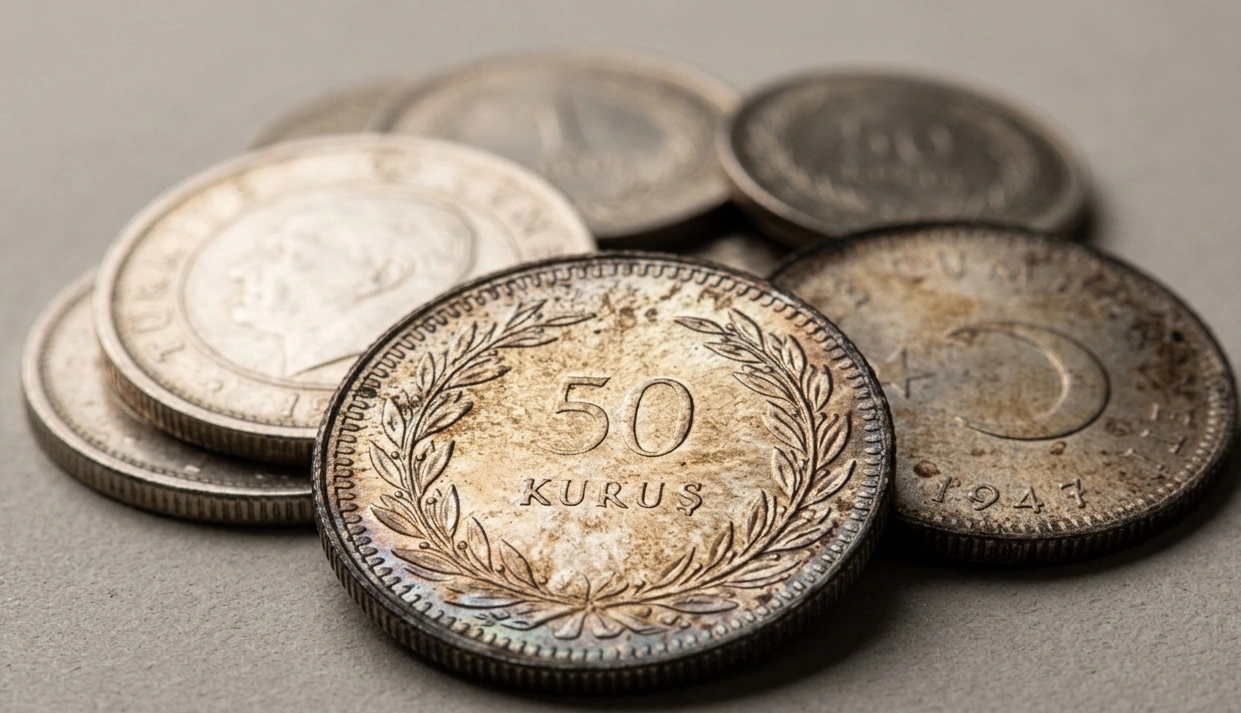
Central Bank of the Republic of Turkey oversees the issuance of exchange tokens ranging from 1 kuruş to 1 lira.
Denomination | Mass | Diameter | Material | Edge Shape |
1 Kuruş | 2.20 grams | 16.50 mm | Copper and Zinc | Smooth |
5 Kuruş | 2.90 grams | 17.50 mm | Copper, Nickel, and Zinc | Smooth |
10 Kuruş | 3.15 grams | 18.50 mm | Copper, Nickel, and Zinc | Smooth |
25 Kuruş | 4.00 grams | 20.50 mm | Copper, Nickel, and Zinc | Reeded |
50 Kuruş | 6.80 grams | 23.85 mm | Bimetal | Reeded |
1 Lira | 8.20 grams | 26.15 mm | Bimetal | Lettered with numbers |
Strict adherence to the 8.20-gram weight for the primary coin remains a security standard.
Metal composition shifts in 2023 resulted in lower-weight batches of the 1 lira coin, dropping to 6.60 grams.
Rising Copper prices on global exchanges drove this specific manufacturing adjustment.
Mintage Hierarchy and Production Cycles
Istanbul houses the Turkish State Mint, which manages the entire volume of national striking.
Production outputs depend on the annual requirements of the economy for small-scale cash.
1 Lira → Average annual mintage of approximately 400 million units
50 Kuruş → Annual output of roughly 150 million units
1 Kuruş → Limited batches due to low purchasing power
Finding 1 kuruş coins in active daily circulation has become nearly impossible by 2026.
Market prices for these coins on secondary platforms exceed their face value fivefold.
Market Dynamics for Rare Series
Turkish coin prices demonstrate steady growth within the commemorative issue segment.
Significant attention focuses on coins dedicated to the Centenary of the Republic of Turkey.
Price evolution for bimetallic 5 lira coins (2023 issue) over the last three years:
2024: 15.00 ₺ ↓ 2025: 28.00 ₺ ↓ 2026: 42.00 ₺
Average annual appreciation rates reach 40% due to intense domestic demand.
Standard circulation coins generally maintain their nominal value without significant deviations.
Classification of Technological Minting Errors
Manufacturing defects at the Turkish Mint create unique lots for auction houses.
Equipment failures lead to several distinct categories of minting errors.
Center Disk
Displacement Observed in bimetallic 50 kuruş and 1 lira denominations. Market prices for visible shifts in 2026 reach 1,200.00 ₺.
Double Obverse Striking
A rare occurrence happening when a blank gets stuck in the press. Values for such specimens vary between 2,500.00 ₺ and 4,000.00 ₺.
Edge Lettering Mistakes
Missing characters or inverted text on the rim of the 1 lira coin. Current market prices hover around 600.00 ₺.
Constant quality control at the factory minimizes the number of such coins entering the money supply.
Comparison of Alloy Corrosion Resistance
Metallurgical properties of Turkish coins are optimized for regional climate conditions.
High humidity in coastal zones requires the use of anti-corrosion additives.
Alloy | Denominations | Resistance Level | Service Life |
Brass (Yellow) | 1, 5, 10 Kuruş | Medium | 12 years |
Cupronickel (White) | 25 Kuruş | High | 20 years |
Bimetal (Combined) | 50 Kuruş, 1 Lira | Very High | 25 years |
Using Zinc in smaller denominations encourages the rapid formation of protective patina.
Bimetallic coins retain their original luster much longer thanks to Nickel plating.
Functionality in Automated Systems
Cash transactions using coins remain stable in Turkey throughout 2026.
Parking terminals and coffee machines are calibrated to detect the electrical conductivity of the alloys.
Verification Flow →
Laser Diameter Check → Platform Weighing → Magnetic Induction Test → Free Coin Identifier Test
Lightweight 1 lira coins (6.60 grams) require software recalibration for machines.
This necessity caused temporary disruptions in vending networks during early 2025.
Rare Commemorative Issues and Mint Sets
State authorities release annual coin sets in "Brilliant Uncirculated" condition.
These collections are not intended for general payment for goods or services.
"Wildlife of Turkey" Set → Features coins with images of rare species
Victory Anniversary Set → Utilizes improved striking technology
Official Mint Tokens → Included in annual government sets
Prices for the 2022 set increased by 210% between 2022 and 2026.
Annual growth percentages average 33% when accounting for inflationary expectations.
Auction Records and Transaction Statistics
Data originates from leading numismatic platforms in Istanbul and Ankara.
Lot Description | Condition | Sale Price | Date |
1 Lira (Struck on 25 Kuruş blank) | MS63 | 3,800.00 ₺ | May 2025 |
2009 Set (First Issue) | Proof | 5,200.00 ₺ | Aug 2025 |
Gold Anniversary Coin (Atatürk) | UNC | 35,000.00 ₺ | Dec 2025 |
Statistics indicate a 12% annual increase in transactions involving certified coins.
Investors prefer allocating funds toward coins with confirmed professional grades.
Professional Appraisal Procedures in Turkey
Authenticity and condition evaluations follow international standards.
Specialized companies applying the Sheldon scale handle these tasks.
Analysis of relief clarity in Atatürk's beard and hair.
Verification of the absence of mechanical damage on the coin's fields.
Determination of original luster preservation levels.
Packaging in airtight plastic slabs with unique serial numbers.
Certification costs for a single coin in 2026 average around 850.00 ₺.
This procedure proves profitable only for specimens with market values exceeding 2,000.00 ₺.
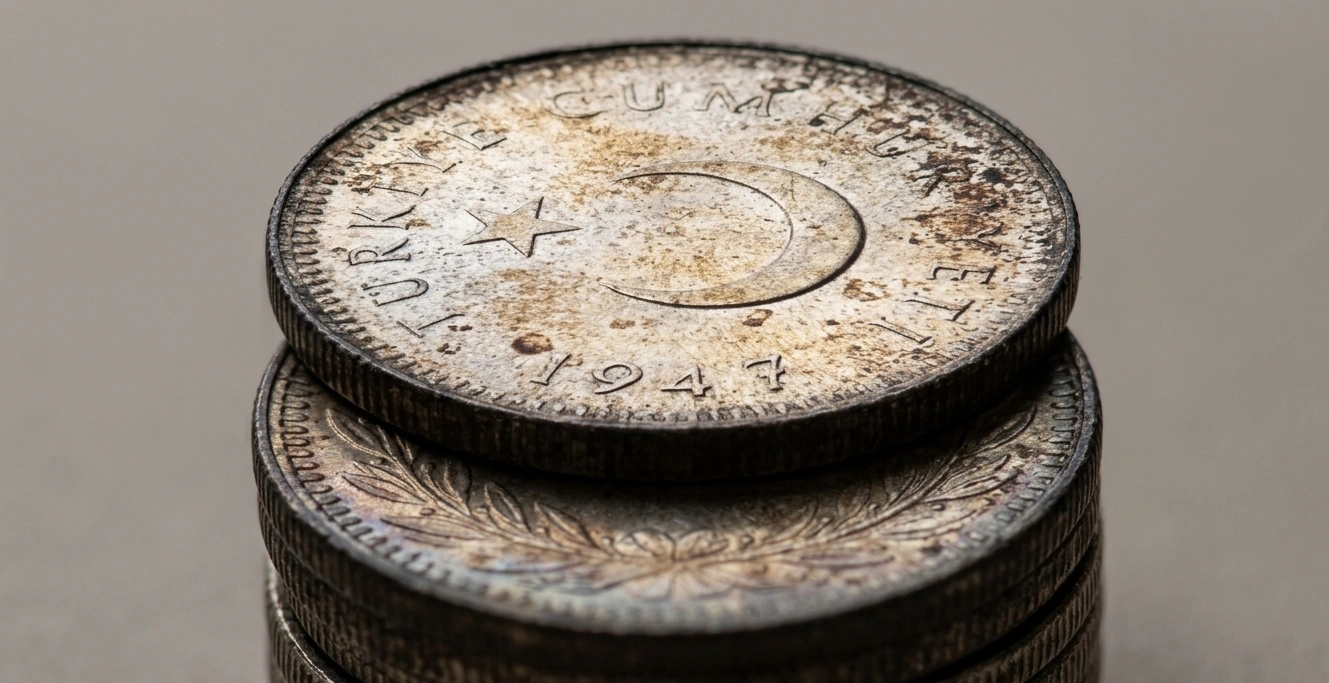
Evolution of the Mustafa Kemal Atatürk Portrait
Obverses of all Turkish coins invariably feature the founder of the republic.
Portrait designs were updated in 2009 to achieve higher levels of realism.
→ Deepened relief of facial lines → Enhanced detail in the clothing depiction → Use of matte surfaces to contrast against the background
Such continuity symbolizes the stability of the state structure.
Differences in portraits across various years allow collectors to form specialized sub-collections.
Counterfeit Prevention and Detection Methods
Low-denomination coins rarely become targets for forgery.
Primary risks involve faking rare commemorative coins made from precious metals.
Testing methods in 2026:
Weight comparison with precision down to hundredths of a gram.
Use of spectrometers to analyze surface chemical composition.
Micro-text quality checks via a coin finder app.
Fake bimetallic coins often show gaps between the outer ring and the center insert.
Circulation Structure: Lira vs Kuruş
Gradual displacement of small denominations from active circulation is observed in 2026.
Kuruş coins are used mostly as change in large retail chains.
Relative share of coins in circulation:
1 Lira → 55% 50 Kuruş → 20% 25 Kuruş → 15% Other Denominations → 10%
Low turnover of 1 and 5 kuruş coins leads to their gradual disappearance from cash registers.
This represents a typical process for economies with high inflation levels.